Third Party Manufacturing Pharma: Quote and Vetting Pack
Third party manufacturing pharma means a licensed manufacturer makes your product to your specification while you keep the brand and the legal responsibility for its quality, so compare quotes on one brief.

By Sunil Kumar, Managing Director - Sales · Updated 10 Oct 2026
Key takeaways
- Contract manufacturing moves production to a licensed manufacturer but not accountability: you answer for quality, and in the United States your quality unit approves or rejects each batch.
- Compare quotes only on one fixed product brief. Minimum order quantity, lead time and payment terms differ between manufacturers, and for a new brand the minimum order is usually the largest cash commitment.
- Screen every site on nine document checks, including its India Schedule M status and, for US supply, its FDA registration.
- Sign a quality agreement, separate from the price contract, before the first batch.
In this article
- 1What is third party manufacturing in pharma, and who is responsible for quality?
- 2Is a loan licence the same as contract manufacturing or a PCD franchise?
- 3How do contract manufacturing quotes differ, and what will the first batch cost?
- 4How do you vet a pharma contract manufacturer before the first batch?
- 5Does the manufacturing licence list your dosage form?
- 6Does the GMP certificate name this exact site?
- 7Does the site meet India's revised Schedule M?
- 8What did the last regulator inspection find?
- 9Is the site registered with FDA, if you sell in the US?
- 10Is a quality agreement signed before production?
- 11Who releases the batch?
- 12Can the manufacturer change anything without your approval?
- 13Can you audit, and how fast are deviations reported?
- 14What should your first inquiry contain?
- 15How does Aarise run a contract manufacturing project?
- 16Frequently asked questions
A first batch from a contract manufacturer usually fails for reasons the sales pitch leaves out. The minimum order is larger than the brand can sell. The site does not meet the current good manufacturing practice (GMP) standard. Or nobody signed a quality agreement.
India's GMP standard has just moved. Manufacturers with turnover below ₹250 crore could apply to delay compliance with the revised Schedule M, but only until 31 December 2025 (Drugs Amendment Rules 2025, GSR 127(E)). A site that cannot show its status now is a risk that lands on you.
It lands on you because outsourcing production does not outsource accountability. This page covers who answers for quality, which terms differ between quotes, nine document checks that screen a manufacturer, and a product brief you can send to any of them.
What is third party manufacturing in pharma, and who is responsible for quality?
Third party manufacturing in pharma is an arrangement in which a licensed manufacturer produces, tests and packs a medicine, and you sell it under your name. Production moves to the manufacturer. Responsibility for the quality of what you sell stays with you. Some manufacturers also let you choose from formulations they already make, so you do not need your own formula.
In the United States this is written into the rules. Under 21 CFR 200.10(b), the U.S. Food and Drug Administration (FDA) "regards extramural facilities as an extension of the manufacturer's own facility." Under 21 CFR 211.22(a), the owner's quality unit must approve or reject drug products made under contract by another company. FDA's quality agreement guidance (November 2016) explains how both parties use a written agreement to divide their current good manufacturing practice (CGMP) activities.
For US supply, three further points apply as of October 2026:
- A foreign site must be registered with FDA, with a US agent (a US-based contact for FDA) and its importers named, before the drug is offered for import. Registration renews each year between October 1 and December 31 (FDA registration instructions).
- Any site can be looked up in FDA's Drug Establishments Current Registration Site (DECRS).
- FDA conducts about 3,000 foreign inspections a year in more than 90 countries and announced on 6 May 2025 that it would expand unannounced inspections abroad (FDA announcement).
Is a loan licence the same as contract manufacturing or a PCD franchise?
No. Third party (contract) manufacturing is production under your brand at the manufacturer's licence. A loan licence is a manufacturing licence in your own name for another licensee's premises. A PCD (propaganda cum distribution) franchise is a sales role for someone else's existing brands. In India, "third party" and "contract" manufacturing are used interchangeably.
| Arrangement | Whose brand | Whose manufacturing licence | Who it suits |
|---|---|---|---|
| Third party (contract) manufacturing | Yours | The manufacturer's | A brand owner who wants production only |
| Loan licence | Yours | A licence in your name, using another licensee's premises | An owner who wants their own licence without building a plant |
| PCD franchise | The franchisor's | The franchisor's | A distributor selling an existing range in a territory |
Under the Drugs and Cosmetics Rules, 1945, a state licensing authority grants a loan licence to an applicant with no manufacturing arrangements of its own who uses another licensee's facilities. Have counsel confirm which structure fits your product and state.
A contract development and manufacturing organization (CDMO) also handles development, not just production; our guide to choosing between an API manufacturer, a distributor and a CDMO shows how to match the supplier type to your stage. If you have a developed formula, the handover is a technical transfer: moving the formula and its test methods to the new manufacturer. Our guide to pharmaceutical technology transfer lists what the handover pack should contain.
How do contract manufacturing quotes differ, and what will the first batch cost?
Quotes differ because minimum order quantity (MOQ, the smallest batch a manufacturer will run), lead time and payment terms differ between manufacturers. The figures below are seller-published and not independently verified, as of October 2026.
- MOQ. One Indian provider gives 2,000 to 10,000 units per stock-keeping unit (SKU, one product, strength and pack) for tablets and capsules. The same page puts Baddi, Panchkula and Chandigarh makers at 1,000 to 3,000 boxes and Mumbai, Hyderabad and Gujarat makers at 50,000+ boxes (JM Laboratories). Another expects 20,000 to 30,000 tablets (Vadsp Pharma).
- Lead time. 25 to 30 days for a first batch and 20 for repeats (Vadsp Pharma), or 20 to 40 days (Philanto Wellness).
- Payment. Vadsp Pharma asks 50% in advance, balance before shipment, and quotes ₹25,000 to ₹50,000 for legal fees, product registration, artwork and initial testing.
- Ours. We confirm MOQ, price per unit, lead time and payment terms in the commercial quotation, after feasibility review.
We publish this page and offer contract manufacturing ourselves, so check any figure against your own quotes.
How do you vet a pharma contract manufacturer before the first batch?
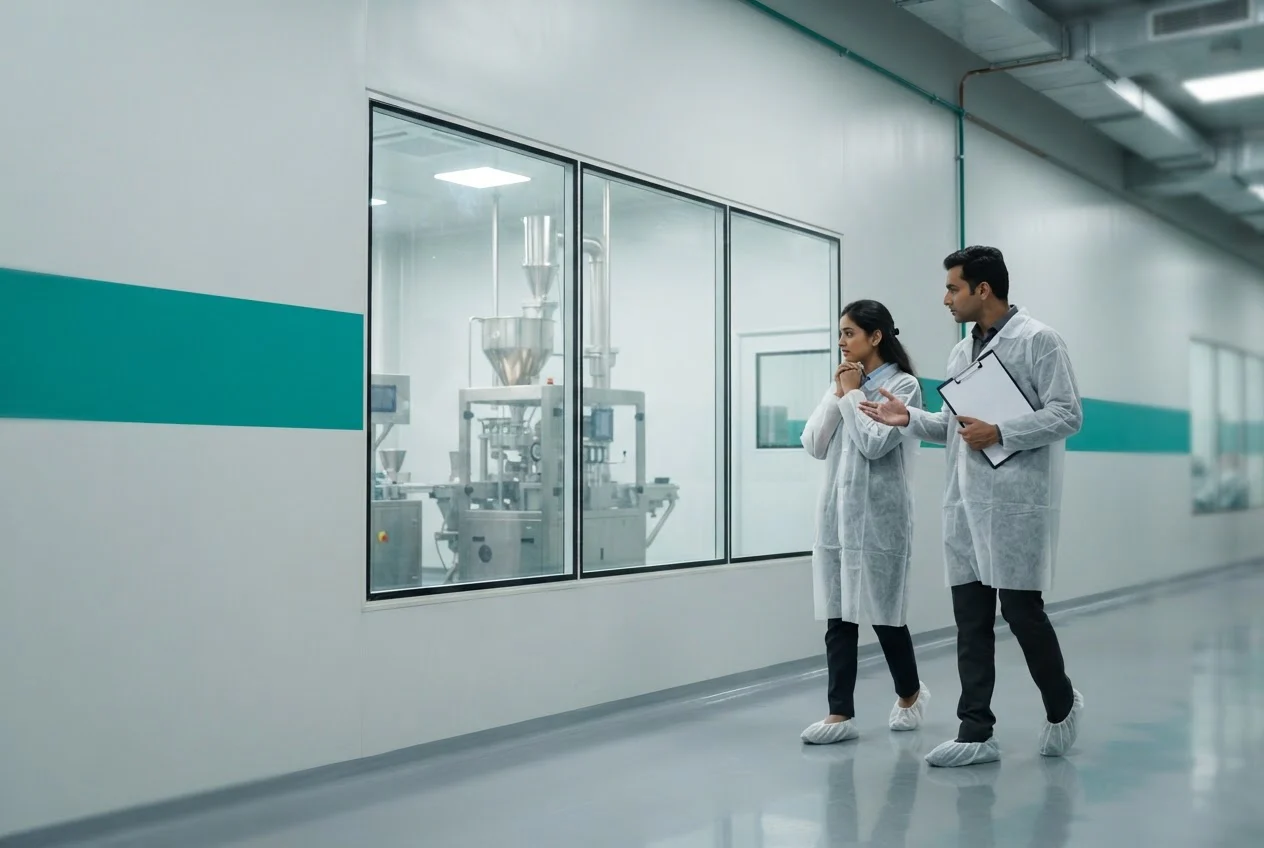
Run nine checks, each answerable from a document, and ask for the documents before you discuss price. As of October 2026, India's revised Schedule M GMP standard applies to Indian manufacturers, and the extension for firms with turnover below ₹250 crore ended on 31 December 2025. CDSCO (Central Drugs Standard Control Organisation) asked state regulators to begin inspections against it (Business Standard, November 2025).
Does the manufacturing licence list your dosage form?
Pass: a copy of the licence lists your form (tablet, capsule, oral liquid, ointment). Fail: no copy, or your form is missing.
Does the GMP certificate name this exact site?
Pass: a certificate under the World Health Organization (WHO) GMP scheme, or an equivalent, shows the address on your quote, lists your form and is in date. Fail: a group-level certificate or a different address. Our explainer on what a WHO GMP certificate proves covers how to read one.
Does the site meet India's revised Schedule M?
Pass: the manufacturer shows its Schedule M compliance status and the latest state or CDSCO inspection outcome for that site. Fail: no document, or an extension still pending.
What did the last regulator inspection find?
Pass: the supplier shares the outcome and date, and shows each observation closed. Fail: it declines, or cannot say when the last inspection was.
Is the site registered with FDA, if you sell in the US?
Pass: the site appears in DECRS and names a US agent. Fail: not found.
Is a quality agreement signed before production?
Pass: a signed agreement, separate from the price contract, names who performs each CGMP activity. Fail: only a commercial quote exists.
Who releases the batch?
Pass: your quality unit reviews the batch record and certificate of analysis (COA, the lab's test report for the batch) before release. Fail: the manufacturer releases on your behalf.
Can the manufacturer change anything without your approval?
Pass: the agreement bars changes to API (active pharmaceutical ingredient) source, process, site or pack without your written approval. Fail: changes are notified afterwards.
Can you audit, and how fast are deviations reported?
Pass: audit rights on notice and for cause, plus deviation reports (departures from approved procedures or specifications) within a stated number of business days in the signed agreement. Our recommendation is 5 to 10. Fail: no audit clause or no deadline.
What should your first inquiry contain?
Your first inquiry should be one complete product brief, because no manufacturer can quote a product it cannot see. Copy this:
Product name and composition (each active and excipient, with strength):
Own formula, or choosing from the manufacturer's existing range:
Dosage form and pack (e.g. tablet, 10 x 10 blister, carton):
Batch size wanted / yearly volume forecast:
Target market(s) and who holds the registration:
API source (named) / packaging supplier:
Specifications and test methods (or "development needed"):
Stability data available (yes / no; pack tested):
Who releases the batch and who signs the quality agreement:
Documents required with each batch (COA, batch record):
Quote requested for: MOQ, price per unit, lead time (first and repeat),
  advance payment, set-up costs listed separately
How does Aarise run a contract manufacturing project?
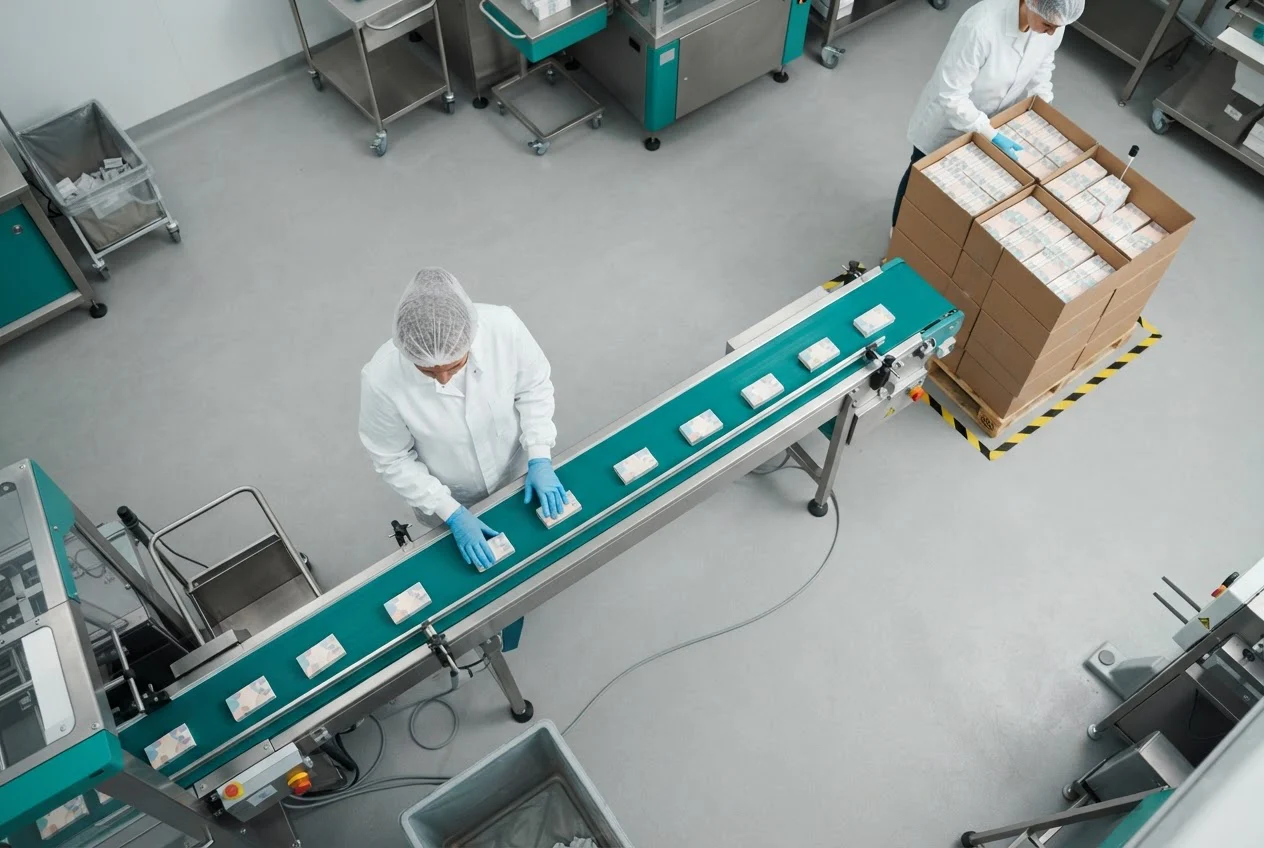
We run it in seven steps: inquiry, feasibility review, commercial quotation, development or technical transfer, production and quality control, packaging, and dispatch. We are a technology-driven CDMO in Haridwar, Uttarakhand, focused on oral dosage forms, from product development through commercial manufacturing, serving generic-drug manufacturers, contract formulators and pharmaceutical distributors in domestic and export markets.
Our finished-dose categories are tablets, capsules, oral liquids, ointments, injections, dry syrup and external applications. If you do not have your own formula, you can start from our finished-dose catalogue, beginning with the tablet range, then follow the same seven steps. In India you also need a wholesale drug licence to sell; our third party manufacturing page lists it among the steps.
Send us the brief with your destination market. In feasibility review we check what the product needs and what documentation your market requires, then quote. Send your product brief, or write to sunil@aarisepharma.com or WhatsApp +91 9899783330.
Frequently asked questions
Sources
- 1.Drugs Amendment Rules 2025 (GSR 127(E)): Schedule M timeline extension, CliniExperts
- 2.CDSCO asks state units to start inspections under Schedule M norms, Business Standard, November 2025
- 3.Drugs and Cosmetics Act, 1940 and Rules, 1945, CDSCO
- 4.21 CFR 200.10, Contacting the Division of Drug Information, Cornell Legal Information Institute
- 5.21 CFR 211.22, Responsibilities of quality control unit, eCFR
- 6.Contract Manufacturing Arrangements for Drugs: Quality Agreements, Guidance for Industry, FDA, November 2016
- 7.How to register a drug establishment, FDA
- 8.Drug Establishments Current Registration Site, FDA
- 9.FDA announces expanded use of unannounced inspections at foreign manufacturing facilities, FDA, 6 May 2025
- 10.Third-party pharma manufacturer in India with low MOQ, JM Laboratories (seller-published)
- 11.How to choose a third party pharma manufacturing company, Vadsp Pharma (seller-published)
- 12.Third party manufacturing, Philanto Wellness (seller-published)
- 13.Pharmaceutical third party manufacturing, Haridwar, Uttarakhand, Aarise Pharmaceuticals
- 14.Tablets, Aarise Pharmaceuticals