
Which Oncology and HPAPI API Suppliers Match Leading Capabilities?
Compare oncology and HPAPI API suppliers by molecule overlap, containment proof, peptide capability, regulatory evidence, and US-buyer readiness.

Pharmaceutical buyers have more to compare than a therapeutic-area claim. The FDA’s public DMF list through 044443 is current through the second quarter of 2026, but a DMF number alone does not establish commercial availability, site readiness, or a buyer’s right to reference it.
For buyers comparing oncology and HPAPI API suppliers, the closest match is the supplier that can document exact molecule overlap, numerical exposure capability, contained operations, current regulatory records, dossier access, development support, and commercial-scale evidence at the manufacturing site. Few suppliers will prove every category for every program.
We built this comparison to help formulation companies and procurement teams separate genuine technical fit from broad capability language before they qualify an API source.
Capabilities We Are Actually Matching
An oncology API match starts with the material itself: the exact molecule, salt, form, impurity profile, particle-size requirement, intended market, and dossier status. A supplier that can make an oncology intermediate is not automatically a commercial oncology API source, and a manufacturer that supplies a small-molecule API may not be equipped for peptide synthesis or high-potency handling.
HPAPIs require a second layer of proof. Potency is not a marketing category. It is an exposure-control problem that must be assessed for the actual operation, from charging and reaction through filtration, milling, sampling, packaging, cleaning, and waste handling. FDA Q7 guidance also expects written quality responsibilities when manufacturing work is performed through a contractor.
What Counts as a Direct Product Match?
A direct match means the supplier can show the requested API in the required salt or polymorph, supported by an appropriate specification, batch history, analytical method, and regulatory pathway. It does not mean that a chemically related molecule appears in a portfolio.
For oncology programs, buyers should also ask whether the supplier can support controlled particle size, solid-state characterization, elemental impurities, genotoxic impurity assessment, stability, and method transfer. These details often determine whether an API is formulation-ready.
Why Is an HPAPI Claim Not Enough?
Occupational exposure bands differ between organizations. We recommend asking for the numerical occupational exposure limit, the company’s OEB mapping, the toxicology basis, and a list of operations covered by the containment strategy. WHO HBEL guidance calls for documented health-based exposure-limit policies and validated cleaning controls when facilities are shared.
A buyer evaluating complex programs can use our complex API alternatives guide alongside this checklist to separate technical capability from a broad catalog claim.
Supplier Profiles for Oncology and HPAPI API Programs
No single supplier profile is the best answer for every program. A commercial oncology generic, a cytotoxic payload, a peptide, and a diversified steroid portfolio create different demands for containment, chemistry, documentation, and scale.
At Aarise Pharma, we treat our own evidence by the same standard. Our public steroid, peptide, and diversified API claims should begin a qualification conversation, not replace molecule-specific documentation, current certificate scope, or site-level verification.
| Supplier Profile | Best Fit | Evidence To Require | Common Limitation |
|---|---|---|---|
| Aarise Pharma | Steroid, hormone, peptide, and diversified API sourcing discussions | Current GMP scope, exact product specification, batch documents, DMF support status, export documentation | Public numerical OEL, dedicated HPAPI-suite evidence, and oncology commercial scale must not be assumed |
| Specialist HPAPI CDMO | Potent oncology, payload, linker, and custom-development programs | Numerical OEL, contained equipment map, industrial-hygiene data, cleaning validation, GMP batch range | May not have a broad commercial API catalog |
| Complex Peptide And API Developer | Peptide synthesis and complex small-molecule development | Synthesis platform, purity profile, analytical support, scale-up examples, GMP site scope | Peptide capability does not prove cytotoxic containment |
| Commercial Diversified-API Manufacturer | Mature generic programs and multi-product supply | Exact molecule availability, active dossier evidence, commercial batch history, redundancy plan | Broad supply does not prove peptide or HPAPI depth |
The practical shortlist should be short. For peptide programs, review suppliers against the questions in our commercial peptide manufacturers comparison, then ask whether their stated chemistry and containment apply to your exact sequence and target scale.
Verifying Product and Containment Match
A credible comparison requires an evidence ledger. Each supplier should answer the same questions, provide documents under suitable confidentiality terms, and identify the manufacturing site responsible for every step. A missing answer should remain visible as a gap, not be converted into a favorable score.
Compare the Exact Material, Not the Therapeutic Label
Start with the target API and record the required grade, salt, polymorph, particle-size distribution, annual volume, and target launch date. Then request a representative Certificate of Analysis, proposed specification, impurity method summary, stability commitment, and packaging configuration.
A batch CoA confirms results for a released lot, but it does not prove an entire commercial program. Our steroid API COA checklist helps buyers read identity, assay, impurities, water, residual solvents, and method references before treating a document as a sourcing decision.
Ask for Containment Evidence by Operation
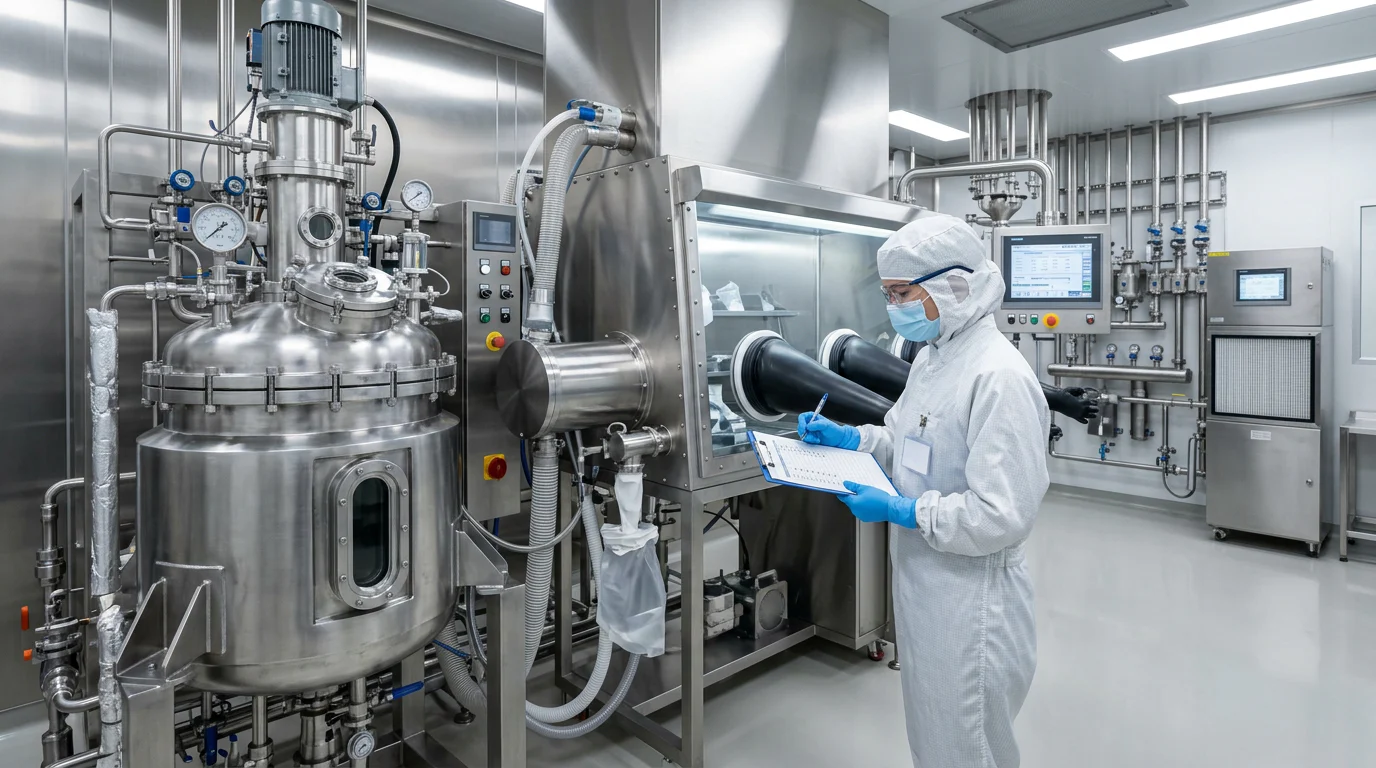
For a potent compound, request the OEL in mass per air volume, the OEB mapping, suite classification, process-flow diagram, pressure cascade, closed-transfer approach, isolator or glovebox details, PPE program, waste controls, and cleaning-validation rationale. The European exposure-limit guideline explains why cross-contamination risk must be assessed with health-based limits, not generic cleaning claims.
Confirm Development, Analytics, and Scale Separately
A supplier may be strong at route scouting but not commercial transfer, or capable of commercial production without particle engineering or difficult analytical work. Ask for examples within the same molecule class and scale range, while protecting confidential client information.
Use our API quality testing checklist to compare the analytical package. It should cover the methods relevant to the program, not just a general list of laboratory instruments.
| Verification Area | Strong Evidence | Red Flag |
|---|---|---|
| Molecule Overlap | Exact API, form, grade, and dated batch history | Broad oncology or specialty claim only |
| HPAPI Containment | Numerical OEL, operation-specific controls, cleaning validation | OEB label with no OEL or equipment scope |
| Peptide Capability | Defined synthesis route, purity target, analytical and scale evidence | Peptide catalog with no GMP manufacturing proof |
| Commercial Scale | Batch range, equipment fit, campaign plan, supply continuity | Capacity claim unrelated to the target API |
| Analytical Support | Method transfer, impurity control, stability, PSD support | Generic QC statement with no program scope |
Regulated-Market and US-Buyer Readiness
US formulation buyers should qualify the supplier, manufacturing site, importer path, and dossier process together. A material can be technically suitable but still create filing or import risk if the stated manufacturer is not the listed manufacturer, the site lacks current registration, or the documentation cannot support the buyer’s regulatory pathway.
FDA API import rules state that foreign establishments manufacturing APIs for US import must register with FDA and list their APIs. At import, the API listing should correspond to the manufacturer, while foreign registration also identifies importers.
For an ANDA-related program, request the Type II DMF number, current activity status, scope, Letter of Authorization process, annual-report status, and written change-notification commitments. A DMF can support a filing, but it is not an approval of the API or the finished drug product.
Verify the Site, Authority, and Scope
Regulatory evidence must be site-specific. Ask for the legal manufacturing name, complete address, activity scope, date, and the authority that performed the inspection or issued the certificate. A certificate for one building, product class, or activity does not automatically extend to another.
For EU programs, the EMA EudraGMDP database can help buyers review GMP certificates, manufacturing authorizations, and non-compliance statements. Certificate absence alone is not proof of non-compliance, but it does mean buyers need other documented evidence.
Build a US-Buyer Documentation Package
A serious US package should include current registration and listing details, importer alignment, product labeling information where applicable, Type II DMF or alternative filing support, a Letter of Authorization process, audit access, quality agreement responsibilities, change notification, and batch-release documentation.
Buyers planning generic-drug supply can compare requirements through our US generic API suppliers resource and prepare a document request before negotiating price or lead time.
Scoring the Shortlist
Weighted scoring works only after documents are received. We recommend using a separate scorecard for each program type, because a supplier with the best commercial API scale may not be the safest HPAPI choice, while an outstanding development partner may not be the right source for a mature multi-ton annual demand.
Keep the scorecard evidence-based. A supplier should receive no points for an unverified claim, and a gap should remain a gap until it is closed with dated, site-specific documentation.
| Evaluation Criterion | Oncology Program | HPAPI Program | Diversified API Program |
|---|---|---|---|
| Exact Molecule, Form, And Dossier Overlap | 25% | 15% | 20% |
| Containment And Cleaning Evidence | 20% | 35% | 5% |
| Regulatory Site Evidence | 20% | 20% | 20% |
| Development, Analytics, And Particle Engineering | 15% | 15% | 10% |
| Commercial Scale And Redundancy | 10% | 10% | 25% |
| US Import, DMF, LOA, And Change Support | 10% | 5% | 20% |
For programs requiring a filing pathway, our filing-ready suppliers guide can help teams prepare their regulatory document request before beginning commercial negotiations.
For steroid APIs intended for US formulation work, add a review of product listing, importer alignment, packaging, transport, CoA controls, and dossier support before the first commercial shipment.
Aarise Pharma for Documented API Sourcing
At Aarise Pharma, we work best when a sourcing decision is treated as a technical qualification, not a catalog search. Bring us the target molecule, dosage form, annual demand, intended market, particle-size needs, and filing timetable. We will help organize the evidence trail around current specifications, batch documentation, available DMF support, packaging, and export documents, then identify what still needs confirmation before a purchase order. For steroid, hormone, peptide, or diversified API programs, we can also help separate a commercial supply conversation from a regulated-market commitment. That distinction protects both the buyer and the program. If your team needs a documented starting point for supplier due diligence, contact Aarise Pharma.
FAQs on Oncology and HPAPI API Suppliers
Is an HPAPI Claim Enough to Qualify a Supplier?
No. A broad capability claim is only a screening signal. Ask for the numerical OEL, covered operation, containment data, cleaning validation, and site-specific worker-protection records.
Is a Type II DMF the Same as FDA Approval?
A Type II DMF can support a filing, but it is not FDA approval. Confirm its activity, scope, Letter of Authorization process, and current manufacturing site.
What Should Oncology Buyers Compare First?
Compare the exact molecule, salt, polymorph, grade, particle-size requirement, impurity profile, intended market, dossier path, batch scale, and supplier evidence for the proposed manufacturing site.
Can a Peptide Supplier Also Handle Cytotoxic HPAPIs?
Possibly, but peptide synthesis does not prove cytotoxic containment. Request numerical exposure evidence, contained-operation details, cleaning validation, worker-protection controls, and prior GMP manufacturing experience.
What Must a US Formulation Buyer Verify?
Verify foreign establishment registration, API listing, importer alignment, DMF or filing support, Letter of Authorization timing, quality-agreement responsibilities, audit access, and US import controls before ordering.