Semaglutide API for US Buyers: Check FDA Import Alert 66-80
US imports of semaglutide API may be detained under FDA Import Alert 66-80 unless the maker's site is on its Green List for semaglutide. Confirm that site and your use route first.

By Sunil Kumar, Managing Director - Sales · Updated 10 Oct 2026
Key takeaways
- Before asking any supplier for semaglutide API, confirm a lawful US use route and whether the manufacturing site is on Import Alert 66-80's Green List for semaglutide. Both decide whether the material can be imported and used.
- On the Green List as published 9 October 2026, we counted 21 entries. Ten list semaglutide: 7 in China and 1 each in Belgium, Denmark and Portugal. None of the 3 Indian entries does.
- Semaglutide sodium and semaglutide acetate are different active ingredients from the one in approved drugs, so the form must be written on the quote and the certificate of analysis.
- A certificate of analysis counts only when it matches the offered batch and your own test agrees with it.
In this article
- 1Who can lawfully use semaglutide API in the US in 2026?
- 2Why does FDA Import Alert 66-80 decide where semaglutide API can come from?
- 3Which form of semaglutide is the active ingredient: base, sodium or acetate?
- 4How do you qualify a semaglutide API supplier in five gates?
- 5What should a semaglutide API request for quotation include?
- 6Frequently asked questions
Many people searching for semaglutide API are looking for a cheaper way to buy semaglutide, which is our inference from how the term is used. For them this page is the wrong tool. FDA's guidance on unapproved glucagon-like peptide-1 (GLP-1) drugs explains the risks, and a prescriber is the right place to start. This page is for buyers who handle the substance itself, the active pharmaceutical ingredient (API): generic developers, formulators, importers and licensed compounders.
For those buyers, price per gram is the smaller question. FDA's review of GLP-1 API manufacturers found that 21% of the 48 sites it evaluated were noncompliant with current good manufacturing practice (CGMP), the quality rules for making drugs. A purity figure on a quote cannot show which side of that line a site sits on.
Two checks settle most of it: the site that made the batch, and the use route you can name for it. Everything else on a quote comes after those two.
Who can lawfully use semaglutide API in the US in 2026?
Lawful use runs through ANDA (abbreviated new drug application, the generic filing) development, 503B (FDA-registered outsourcing facilities compounding larger batches) and 503A (state-licensed pharmacies compounding for individual patients). ANDA development is open, 503B is proposed to close, and 503A carries the least oversight of the API.
| Route | Where it stands as of October 2026 | What it means for sourcing |
|---|---|---|
| ANDA development | FDA granted Apotex the first tentative approval for a generic Ozempic, announced 10 April 2026 | Development and validation supply from a CGMP-compliant site |
| 503B outsourcing facility | FDA proposed on 30 April 2026 to leave semaglutide off the 503B bulks list | Confirm the final status before buying |
| 503A pharmacy, patient-specific | Exempt from CGMP | Your own verification is the only control on the API |
| Research label, resale, consumer vials | No route to an approved human medicine | We do not supply this |
HCPLive reported the Apotex tentative approval, and Apotex announced it. A tentative approval means the product meets the scientific and regulatory requirements but cannot be marketed until patents or exclusivities lapse. Our inference: ANDA teams buying today are buying for development, not for launch.
The 503B bulks list names the substances outsourcing facilities may compound from. In its 30 April 2026 announcement, FDA attributed to Commissioner Marty Makary the position that outsourcing facilities cannot lawfully compound from bulk substances when approved drugs are available, unless there is a clear clinical need. The announcement set a comment deadline of 29 June 2026. As of October 2026 we have found no final determination, so check the Federal Register notice before buying.
Section 503A of the Federal Food, Drug, and Cosmetic Act exempts qualifying state-licensed pharmacies compounding for individual patients from CGMP, as FDA's compounding laws page explains. As Import Alert 66-80 notes, this includes the requirement that the API meet specifications for impurities or potency. Outsourcing facilities under 503B remain subject to CGMP.
We supply semaglutide as bulk API or raw powder to business and institutional buyers, not as finished vials. Regulatory status and permitted end use are set product by product, and buyers confirm import authorization and permitted end use before commercial supply.
Why does FDA Import Alert 66-80 decide where semaglutide API can come from?
Import Alert 66-80 lets FDA detain GLP-1 API shipments without physical examination (DWPE) unless the product and manufacturing site are on the alert's Green List. The site, not the seller, decides whether a shipment clears. FDA treats these APIs as drugs under the Federal Food, Drug, and Cosmetic Act, subject to CGMP.
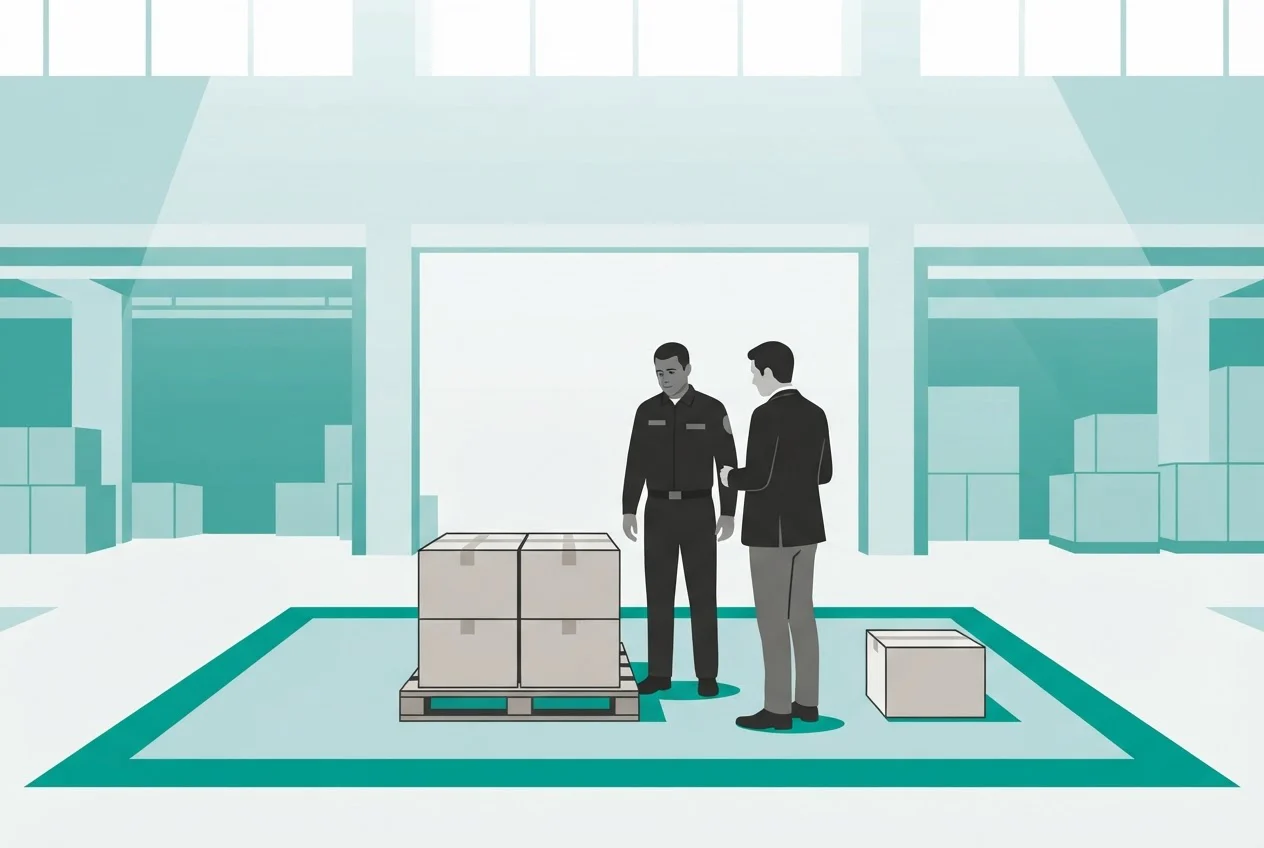
The alert also records a pattern of sites that register as GLP-1 API makers, offer material for import, refuse FDA's records requests and then deregister within a short period. A trading company can therefore sit between you and a site that has never been checked.
FDA's page shows each Green List entry with the firm name blacked out, so we counted entries, not firms. On the page as published 9 October 2026, we counted the country-headed entries (21) and, within them, the entries listing product code 61P[][]72, FDA's code for semaglutide.
| Country | Green List entries | Entries listing semaglutide |
|---|---|---|
| China | 12 | 7 |
| India | 3 | 0 |
| Belgium | 1 | 1 |
| Denmark | 1 | 1 |
| Portugal | 1 | 1 |
| Canada, Ireland, Italy (1 each) | 3 | 0 |
| Total | 21 | 10 |
The 3 Indian entries list liraglutide (2) and exenatide (1). The list changes, so check the live alert at every order.
We publish this page. Aarise Pharmaceuticals does not claim any of these entries, and as of October 2026 we do not publish a Green List listing for our semaglutide source, so we make no claim of US FDA standing for it. We confirm the manufacturing source and site name in the quotation, and you should match it against the live alert before ordering.
The alert says FDA divisions "may" detain, so a site that is not listed is not barred. Our recommendation: do not commit commercial volume until you have matched the batch's manufacturing site against the list. A firm petitions for listing with certificates of analysis for its last ten API lots, release specifications, stability data, process validation, batch records and out-of-specification results. Ask any supplier for the same evidence.
Which form of semaglutide is the active ingredient: base, sodium or acetate?
The approved drugs contain semaglutide, and FDA states that the sodium and acetate salts are different active ingredients. Semaglutide carries CAS number 910463-68-2 (a Chemical Abstracts Service registry number). Ask each supplier to state the form in writing.
FDA's page on unapproved GLP-1 drugs is direct: "These salt forms, including semaglutide sodium and semaglutide acetate, are different active ingredients than are used in the approved drugs." It adds that FDA is "not aware of any lawful basis for their use in compounding."
A quote that says only "semaglutide API, 99%" leaves this open. A purity figure says nothing about the form.
How do you qualify a semaglutide API supplier in five gates?
Run five gates in order and stop at the first fail. Each is a test with a pass and a fail, and the first three cost nothing, so run them before you request samples.
- Gate 1: Can you name a lawful route for the batch?Pass: one sentence names the route (ANDA development, 503B or 503A) and your regulatory affairs lead or counsel has confirmed it. Fail: the stated purpose is "research use" for material you intend to put into people, or the plan is resale to clinics or consumers.
- Gate 2: Is the manufacturing site on the Green List for semaglutide?
Pass: the original manufacturer's name and address on the certificate of analysis (COA, the batch quality report) correspond to an entry listing code 61P[][]72 in the live alert on the day you order. Fail: the supplier will not name the site, names only a trader, or the site's entry lists other GLP-1 products but not semaglutide. Apply this gate to every supplier.
- Gate 3: Is the form stated and not a salt?Pass: the quote and COA state CAS 910463-68-2 and a form that is not semaglutide sodium or acetate. Fail: the form is not stated, or a salt is named.
- Gate 4: Does the COA belong to the offered batch?
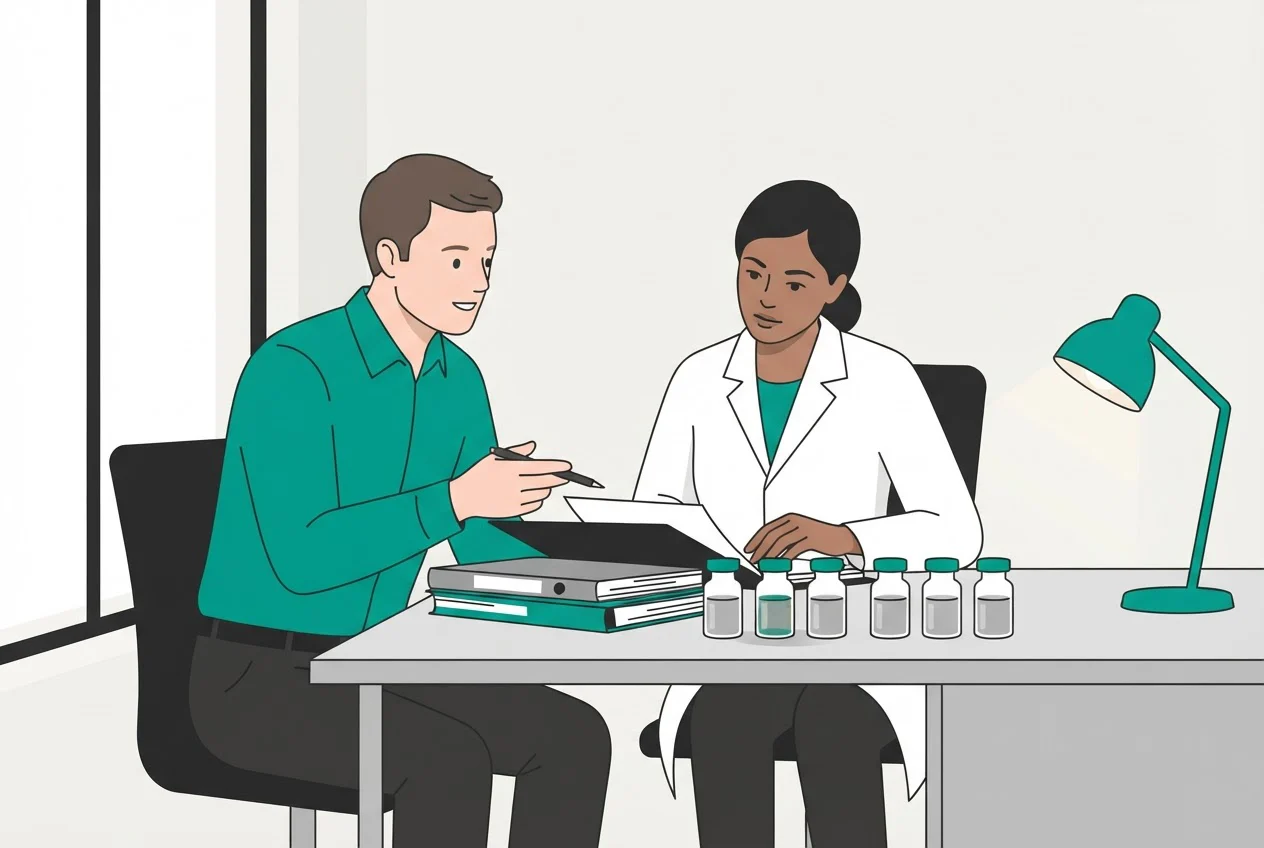
Pass: ICH Q7, section 11.4, expects a COA to give the batch number and release date, list each test with its acceptance limit and numerical result, and be dated and signed by the quality unit with the original manufacturer's name, address and telephone number. The batch number must also match the container label and proforma invoice. Where a trader or broker reissues the certificate, Q7 expects it to reference the original manufacturer and attach the original batch certificate. Fail: a headline such as "98%" with no results, a template with no batch number, or mismatched batch numbers. See our ICH Q7 explainer. Purity and content are different measurements, so ask for both; see peptide HPLC purity versus content.
- Gate 5: Does your own testing agree with the COA?Pass: your laboratory or a contract laboratory tests an evaluation sample for identity and impurity profile and agrees with the COA within your specification before any commercial order. Fail: you skip testing because the paperwork looks complete.
Label claims are not evidence. In a 2024 peer-reviewed study, researchers made six test purchases from illegal online pharmacies. Three injection vials arrived, and measured semaglutide purity in the vials purchased ranged from 7.7% to 14.37% against 99% on the labels. That was a small purchase of finished products, not API from business suppliers, so it does not describe API suppliers generally. It does show why you test the batch. For the wider audit, use our peptide API supply chain qualification checklist.
What should a semaglutide API request for quotation include?
A request for quotation (RFQ) should carry the product and CAS number, quantity, destination, grade or purity, required documents, payment terms and Incoterms (international shipping terms). Add the form, use route and batch status so the quote can be checked against the five gates.
Product:          Semaglutide API, CAS 910463-68-2
Form:             state base or salt
Quantity:         evaluation / pilot / commercial (kg)
Grade or purity:  specification you require
Use route:        ANDA development / 503B / 503A / other
Destination:      country and importer of record
Incoterms:        e.g. CIF, DAP
Documents:        COA, specification, SDS, manufacturing site name
                  and address, impurity profile, stability data
Batch status:     released stock / made to order
Payment terms:    proposed terms
Company details:  legal name, address, contact
This is how we handle it. You send the RFQ, and we check availability and sourcing options against your quantity, specification, destination and documents. We then send a commercial quotation that names the manufacturing source and site. We share the COA, specifications and SDS where applicable. After you approve an evaluation sample, we support commercial and bulk supply, with order, documentation and export coordination after confirmation. Our peptide raw material catalog lists semaglutide among our peptide APIs.
Pricing follows current rates and is quoted product by product, so we do not publish a single price. Minimum order quantity (MOQ) is confirmed at quotation, and the lead time is stated in the quotation or proforma invoice. In-stock material can ship sooner than made-to-order. Evaluation quantities go to qualified business buyers, with sample size, price and documents confirmed per product. For international commercial orders, payment terms are generally 100% advance by bank transfer unless alternatives are agreed in writing.
Send your RFQ through our contact page and choose Product Information.
Frequently asked questions
Sources
- 1.FDA Import Alert 66-80: Detention Without Physical Examination of GLP-1 Receptor Agonist Bulk Drug Substances (published 9 October 2026)
- 2.FDA: FDA's concerns with unapproved GLP-1 drugs used for weight loss
- 3.FDA: FDA proposes to exclude semaglutide, tirzepatide and liraglutide from the 503B bulks list (30 April 2026)
- 4.Federal Register: List of Bulk Drug Substances for Which There Is a Clinical Need Under Section 503B (1 May 2026)
- 5.FDA: Human Drug Compounding Laws (sections 503A and 503B)
- 6.ICH Q7: Good Manufacturing Practice Guide for Active Pharmaceutical Ingredients, section 11.4
- 7.HCPLive: FDA gives tentative approval of ANDA for generic semaglutide injection (April 2026)
- 8.Apotex company announcement: first US FDA tentative approval for a generic Ozempic (10 April 2026)
- 9.Journal of Medical Internet Research (2024): Multifactor quality and safety analysis of semaglutide products sold by online sellers without a prescription